

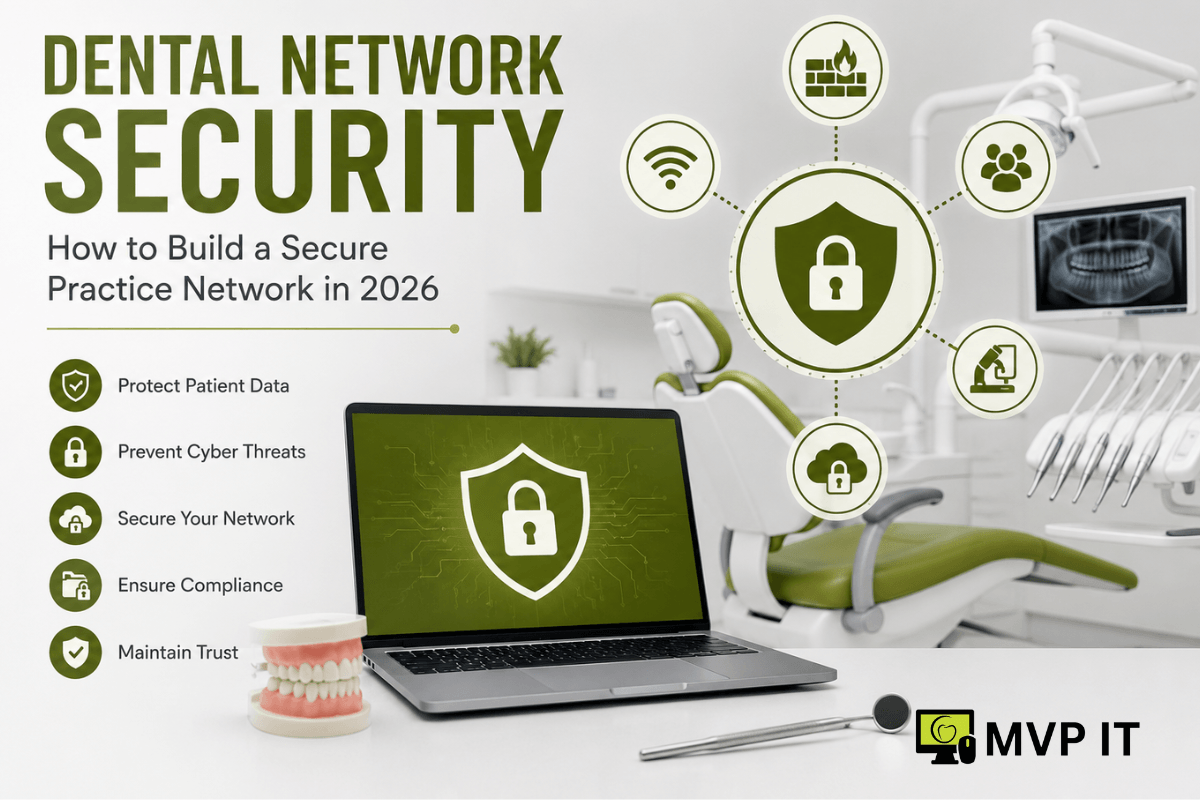

Dental practices rely on technology more than ever before. From digital imaging systems and practice management software to cloud-based patient records and online appointment scheduling, every part of a modern clinic depends on a secure and reliable network. However, as technology evolves, cyber threats continue to become more sophisticated. Without strong Dental Network Security, even a small security gap can lead to data breaches, costly downtime, regulatory penalties, and loss of patient trust.
In 2026, building a secure practice network is no longer optional—it is essential. At MVP IT, we help dental clinics across Calgary and Edmonton create secure, compliant, and high-performing IT environments that protect patient information while supporting efficient daily operations.
Why Dental Network Security Matters in 2026
Dental clinics store highly sensitive patient information, including medical histories, insurance details, payment information, and personal identification. Because of this valuable data, cybercriminals increasingly target healthcare providers.
Additionally, ransomware attacks, phishing emails, and unauthorized access attempts continue to rise every year. Consequently, dental practices without proper network security face significant financial and operational risks.
A secure network helps your practice:
- Protect confidential patient information
- Reduce the risk of cyberattacks
- Meet healthcare compliance requirements
- Minimize costly downtime
- Improve staff productivity
- Build long-term patient trust
Therefore, investing in network security is also an investment in your practice’s reputation and future.
Common Security Risks Facing Dental Practices
Understanding potential threats is the first step toward building a secure network.
Ransomware Attacks
Cybercriminals can encrypt your patient records and demand payment for their release. As a result, your practice may experience days of downtime.
Phishing Emails
Employees may accidentally click malicious links or attachments. Consequently, attackers can gain access to your systems and sensitive information.
Outdated Software
Older operating systems and applications often contain security vulnerabilities. Therefore, regular updates are critical for maintaining protection.
Weak Passwords
Simple or reused passwords make it much easier for attackers to access business systems. Instead, strong password policies and multi-factor authentication should be standard.
Unsecured Wi-Fi Networks
Guest Wi-Fi should always remain separate from your internal business network. Otherwise, attackers may find an easy path into your systems.
Essential Components of a Secure Dental Practice Network
Install Enterprise-Grade Firewalls
A modern firewall acts as the first line of defense against cyber threats. It monitors incoming and outgoing traffic while blocking suspicious activity before it reaches your network.
At MVP IT, we configure advanced firewall solutions designed specifically for healthcare environments.
Segment Your Network
Network segmentation separates critical systems from less sensitive devices.
For example, your practice should separate:
- Patient management systems
- Digital imaging equipment
- Staff computers
- Guest Wi-Fi
- Internet of Things (IoT) devices
As a result, even if one area becomes compromised, attackers cannot easily move throughout the network.
Keep Systems Updated
Regular software updates close known security vulnerabilities.
This includes:
- Windows updates
- Practice management software
- Antivirus programs
- Network equipment firmware
- Dental imaging software
Furthermore, automated patch management reduces the risk of missing important updates.
Use Multi-Factor Authentication (MFA)
Passwords alone are no longer enough.
Adding multi-factor authentication requires users to verify their identity using an additional security method, significantly reducing unauthorized access.
Therefore, every remote login and administrative account should use MFA.
Deploy Advanced Endpoint Protection
Every workstation, server, and laptop should include advanced antivirus and endpoint detection software.
These tools continuously monitor devices, identify suspicious behavior, and stop threats before they spread across the network.
Backup and Disaster Recovery Are Essential
Even the strongest security cannot eliminate every risk.
Therefore, every dental practice should maintain secure, encrypted, and automated backups.
An effective backup strategy includes:
- Daily automated backups
- Offsite cloud storage
- Encrypted backup files
- Regular recovery testing
- Rapid disaster recovery planning
Consequently, your practice can recover quickly if ransomware, hardware failure, or accidental deletion occurs.
Employee Training Strengthens Security
Technology alone cannot stop every cyber threat.
Because human error remains one of the leading causes of data breaches, staff education is equally important.
Training should cover:
- Recognizing phishing emails
- Creating strong passwords
- Safe internet browsing
- Protecting patient information
- Reporting suspicious activity immediately
In addition, regular security awareness sessions help employees stay informed about evolving threats.
Monitor Your Network Around the Clock
Continuous monitoring helps identify unusual activity before it becomes a major incident.
Professional managed IT services include:
- 24/7 network monitoring
- Threat detection
- Performance monitoring
- Security alerts
- Proactive maintenance
As a result, issues are resolved faster, reducing downtime and improving overall system reliability.
Why Partner with MVP IT?
Managing Dental Network Security requires specialized knowledge of both healthcare technology and cybersecurity.
MVP IT provides comprehensive IT solutions tailored specifically for dental practices, including:
- Managed IT services
- Network design and optimization
- Cybersecurity protection
- Data backup and disaster recovery
- Microsoft 365 management
- Cloud solutions
- Hardware support
- Ongoing IT consulting
Whether your clinic is opening a new location or upgrading an existing network, our experienced team delivers customized solutions that keep your systems secure, compliant, and efficient.
Frequently Asked Questions
What is Dental Network Security?
Dental Network Security refers to the technologies, policies, and procedures used to protect a dental practice’s computers, servers, patient records, and network infrastructure from cyber threats and unauthorized access.
Why is network segmentation important for dental practices?
Network segmentation isolates critical systems from guest networks and less secure devices. As a result, cyber threats are less likely to spread throughout the entire practice.
How often should dental practices update their systems?
Security updates should be installed as soon as possible after release. Automated patch management helps ensure systems remain protected against newly discovered vulnerabilities.
Does my dental practice need managed IT services?
Yes. Managed IT services provide proactive monitoring, cybersecurity, maintenance, backups, and expert support, allowing your team to focus on patient care rather than technology issues.
Can MVP IT help improve our existing network security?
Absolutely. MVP IT evaluates your current infrastructure, identifies vulnerabilities, and implements customized security solutions designed specifically for dental practices.
Conclusion
As cyber threats continue to evolve in 2026, investing in strong Dental Network Security is one of the smartest decisions a dental practice can make. By implementing secure firewalls, network segmentation, multi-factor authentication, regular backups, continuous monitoring, and ongoing employee training, your clinic can better protect sensitive patient data while ensuring uninterrupted operations.
If you’re ready to strengthen your practice’s IT infrastructure, MVP IT is here to help. Our team delivers reliable, secure, and fully managed dental IT solutions tailored to your clinic’s unique needs.
Contact MVP IT today to schedule a network security assessment and discover how we can help protect your dental practice.
MVP IT
3850 19 St NE Bay 5, Calgary, AB T2E 6V2
14065 Victoria Trail NW #211, Edmonton, AB T5Y 2B6
Phone: (587) 585-6871