

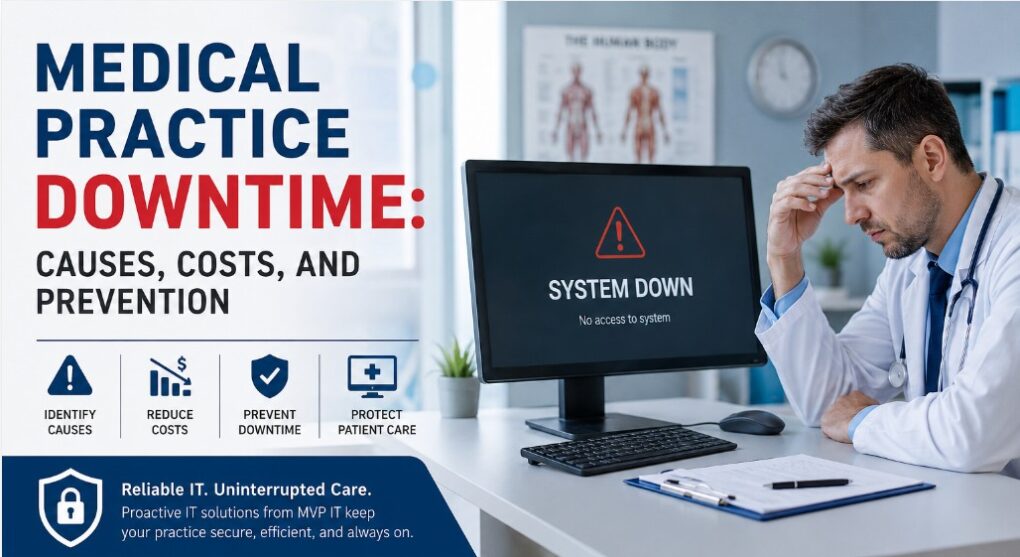

Healthcare organizations rely heavily on technology to deliver efficient patient care, manage electronic medical records (EMRs), process billing, and communicate securely. When technology fails, even for a short period, the consequences can be significant. Medical Practice Downtime can disrupt patient care, reduce staff productivity, increase operational costs, and damage a practice’s reputation.
At MVP IT, we understand how critical uninterrupted IT performance is for healthcare providers. Our managed IT services help medical practices across Calgary and Edmonton minimize downtime, strengthen cybersecurity, and maintain business continuity.
What Is Medical Practice Downtime?
Medical Practice Downtime refers to any period when essential IT systems, software, networks, or medical applications become unavailable or fail to perform as expected. Downtime may be planned, such as scheduled maintenance, or unplanned due to technical failures, cyberattacks, or hardware issues.
Even a few minutes of downtime can interrupt appointments, delay access to patient records, and create compliance challenges.
Common Causes of Medical Practice Downtime
Understanding the root causes of downtime is the first step toward preventing it.
Hardware Failures
Servers, workstations, networking equipment, and storage devices naturally wear out over time. Unexpected hardware failures can bring an entire practice to a standstill if proper redundancy is not in place.
Cybersecurity Threats
Healthcare organizations are frequent targets of ransomware, phishing attacks, and malware because they store sensitive patient information. A successful cyberattack can lock providers out of their systems for hours or even days.
Internet or Network Outages
Cloud-based healthcare applications depend on reliable internet connectivity. Network disruptions can prevent staff from accessing patient records, scheduling software, or communication platforms.
Software Errors and Updates
Software bugs, failed updates, or compatibility issues can unexpectedly disrupt critical healthcare applications, causing workflow interruptions.
Human Error
Accidental deletion of files, incorrect system configurations, or improper software installations remain common causes of IT downtime in medical practices.
Power Interruptions
Unexpected power outages without proper backup power systems can immediately halt access to computers, servers, and medical devices.
The Hidden Costs of Medical Practice Downtime
While downtime is frustrating, its financial and operational impacts are often underestimated.
Lost Revenue
Cancelled appointments, delayed procedures, and billing interruptions directly affect a practice’s income. The longer systems remain unavailable, the greater the financial loss.
Reduced Staff Productivity
Without access to digital systems, staff must rely on manual processes that are slower, less accurate, and more labor-intensive.
Patient Dissatisfaction
Patients expect timely, efficient healthcare. Delays caused by technology failures can reduce patient trust and negatively impact online reviews and referrals.
Compliance Risks
Healthcare organizations must protect patient data and maintain secure access to medical records. Extended downtime may create compliance concerns related to privacy regulations and record management.
Recovery Expenses
Emergency IT repairs, forensic investigations, data recovery, and system restoration often cost significantly more than proactive maintenance.
How to Prevent Medical Practice Downtime
Preventing downtime requires a proactive IT strategy rather than simply reacting to problems after they occur.
Implement Proactive IT Monitoring
Continuous monitoring identifies hardware issues, storage limitations, unusual network activity, and performance problems before they become major outages.
At MVP IT, proactive monitoring allows healthcare providers to resolve many issues before they impact patient care.
Maintain Regular Data Backups
Reliable backups ensure patient records and business-critical data can be quickly restored if systems fail or ransomware strikes.
Backups should be encrypted, regularly tested, and stored securely using both local and cloud-based solutions.
Strengthen Cybersecurity
A layered cybersecurity approach includes:
- Multi-factor authentication
- Advanced endpoint protection
- Firewall management
- Email security
- Employee cybersecurity awareness training
- Regular vulnerability assessments
These measures significantly reduce the risk of costly cyber incidents.
Keep Systems Updated
Routine software updates and security patches help eliminate known vulnerabilities while improving application stability and performance.
Professional IT management ensures updates are properly tested before deployment.
Develop a Downtime Response Plan
Every medical practice should have documented procedures for responding to system outages. Staff should understand how to continue serving patients while IT systems are restored.
An effective response plan minimizes confusion and reduces recovery time.
Invest in Reliable Infrastructure
Modern servers, enterprise-grade networking equipment, battery backup systems, and cloud infrastructure improve reliability and reduce the likelihood of unexpected failures.
Why Choose MVP IT for Healthcare IT Services?
Healthcare technology requires specialized expertise. MVP IT provides managed IT services designed specifically to support medical practices with reliable, secure, and compliant technology solutions.
Our services include:
- 24/7 IT monitoring
- Managed cybersecurity
- Data backup and disaster recovery
- Cloud solutions
- Network management
- Microsoft 365 support
- Business continuity planning
- IT consulting for healthcare providers
Whether your practice operates in Calgary or Edmonton, MVP IT delivers responsive support that helps minimize Medical Practice Downtime while protecting sensitive patient information.
Frequently Asked Questions
What is Medical Practice Downtime?
Medical Practice Downtime is any period when healthcare technology systems become unavailable due to hardware failures, software issues, cyberattacks, network outages, or maintenance, preventing normal clinical operations.
How much can medical practice downtime cost?
Costs vary depending on practice size, but downtime can result in lost revenue, delayed patient care, emergency IT repair expenses, reduced productivity, and potential compliance risks.
How can healthcare practices reduce downtime?
Practices can reduce downtime by implementing proactive IT monitoring, maintaining secure backups, strengthening cybersecurity, updating systems regularly, and partnering with an experienced managed IT provider like MVP IT.
Why is cybersecurity important for preventing downtime?
Cybersecurity helps prevent ransomware, malware, and phishing attacks that can disable critical healthcare systems and interrupt patient care.
Should medical practices have a disaster recovery plan?
Yes. A disaster recovery plan enables healthcare organizations to restore systems quickly, protect patient data, and continue operations during unexpected disruptions.
Conclusion
Technology plays an essential role in modern healthcare, making uninterrupted system availability critical for both patient care and business operations. Medical Practice Downtime can lead to financial losses, operational disruptions, compliance concerns, and reduced patient satisfaction. Fortunately, proactive IT management, strong cybersecurity, reliable backups, and strategic planning can significantly reduce these risks.
MVP IT is committed to helping healthcare providers build resilient, secure, and efficient IT environments that support uninterrupted patient care. Whether you need managed IT services, cybersecurity protection, or disaster recovery planning, our experienced team is ready to help.
Contact MVP IT today to learn how our healthcare IT solutions can reduce Medical Practice Downtime, improve system reliability, and keep your medical practice operating smoothly.
MVP IT
Calgary Office
3850 19 St NE Bay 5
Calgary, AB T2E 6V2
Edmonton Office
14065 Victoria Trail NW #211
Edmonton, AB T5Y 2B6
Phone: (587) 585-6871