


Technology has become the backbone of modern healthcare. From patient scheduling and electronic health records (EHR) to cybersecurity and telehealth systems, every medical practice depends on reliable IT support. In 2026, healthcare providers face a critical decision: should they choose Managed IT services or build an In-House IT team?
For clinics, dental offices, hospitals, and private practices, the right IT model can improve efficiency, reduce downtime, strengthen cybersecurity, and lower operational costs. Choosing the wrong model, however, can lead to expensive issues, compliance risks, and frustrated staff.
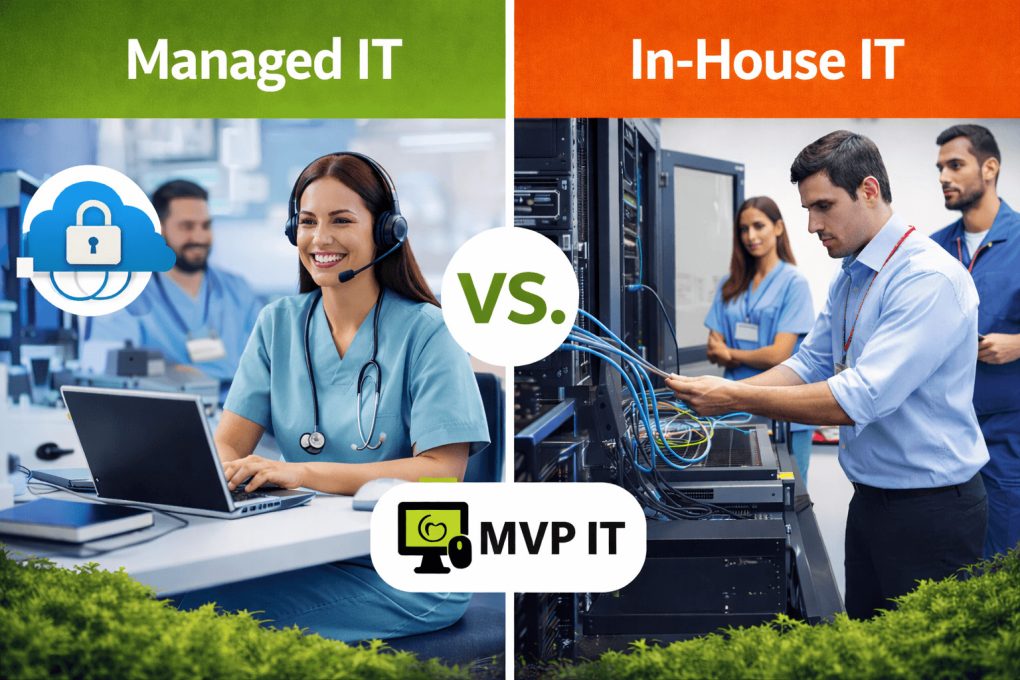
In this guide, we compare Managed IT vs In-House IT for Medical Practices to help you decide what works best for your healthcare organization.
Why IT Support Matters More Than Ever in Healthcare
Medical practices now rely heavily on digital systems for daily operations. A single server failure, ransomware attack, or network outage can delay patient care and create financial losses.
Healthcare providers in 2026 need IT support for:
- Electronic Health Records (EHR)
- HIPAA compliance and data security
- Cloud backups and disaster recovery
- Telemedicine platforms
- Appointment systems
- Billing software
- Wi-Fi and network management
- Medical device connectivity
Whether you hire internal staff or outsource to a provider, dependable IT support is essential.
What Is In-House IT?
In-house IT means hiring your own internal team or technician to manage technology systems within your practice.
This team may handle:
- Computer maintenance
- Printer and hardware setup
- Password resets
- Network troubleshooting
- Software installations
- Staff tech support
- Security monitoring
Many larger healthcare facilities prefer in-house IT because they want direct control over daily operations.
What Is Managed IT?
Managed IT services involve outsourcing your technology support to a professional IT company like MVP IT, which monitors, maintains, and secures your systems remotely and onsite when needed.
Managed IT providers typically offer:
- 24/7 monitoring
- Help desk support
- Cybersecurity protection
- Data backup solutions
- Cloud migration
- Compliance support
- Vendor management
- Strategic IT planning
This model has become increasingly popular among small to mid-sized medical practices.
Cost Comparison: Which Is More Affordable in 2026?
For many healthcare businesses, budget plays a major role.
In-House IT Costs
Hiring an internal IT employee includes:
- Salary
- Benefits
- Paid leave
- Training
- Recruiting costs
- Tools and software
Even one skilled IT technician can cost significantly per year, especially in Canada.
Managed IT Costs
Managed IT services usually come with a predictable monthly fee. This gives practices access to a full team of specialists without paying multiple salaries.
For smaller clinics and growing practices, managed IT is often the more cost-effective option.
Winner: Managed IT for affordability and predictable expenses.
Cybersecurity and HIPAA Compliance
Healthcare is one of the top targets for cybercriminals. Patient data is highly sensitive, making cybersecurity a top priority.
In-House IT
An internal technician may handle security tasks, but one person often cannot cover everything:
- Threat monitoring
- Firewall management
- Email security
- Backup testing
- Compliance updates
- Employee training
Managed IT
Managed IT providers often use advanced security tools and dedicated experts to protect medical practices from threats.
They can help with:
- Ransomware prevention
- Endpoint protection
- Multi-factor authentication
- Encrypted backups
- Compliance documentation
- Security audits
Winner: Managed IT for stronger cybersecurity coverage.
Speed of Support and Downtime Prevention
When systems fail in a clinic, every minute matters. Staff cannot access records, appointments get delayed, and patient experience suffers.
In-House IT
An on-site technician can quickly solve physical hardware issues. However, if they are unavailable, sick, or overloaded, delays happen.
Managed IT
Managed IT companies provide multiple technicians and remote support. Many issues are fixed before staff even notice them through proactive monitoring.
Winner: Managed IT for faster response and reduced downtime.
Scalability for Growing Practices
Medical businesses often expand by adding locations, new staff, or new services.
In-House IT
Growth may require hiring more technicians, buying new tools, and increasing management overhead.
Managed IT
Managed providers scale services easily. Whether opening a second clinic or adding telehealth, support can expand quickly.
Winner: Managed IT for flexibility and growth.
Control and Personalization
Some healthcare organizations prefer complete control over systems and internal workflows.
In-House IT
An internal team works directly with staff and understands the office environment deeply.
Managed IT
While providers customize solutions, they are still an external partner.
Winner: In-House IT for direct control and internal presence.
Best Choice by Practice Size
Small Clinics and Dental Offices
Usually benefit more from Managed IT because it saves money and provides expert support.
Mid-Sized Practices
Managed IT or hybrid models work well depending on complexity.
Large Hospitals and Multi-Location Groups
May benefit from an in-house department supported by external specialists.
Hybrid IT: The Smart 2026 Solution
Many medical practices now choose a hybrid model.
This means:
- Internal staff handles day-to-day office support
- Managed IT provider handles cybersecurity, backups, cloud systems, and advanced projects
This gives the best balance of control and expertise.
Questions to Ask Before Choosing
Before deciding between Managed IT vs In-House IT for Medical Practices, ask:
- What is your monthly IT budget?
- How many users and devices need support?
- Do you need 24/7 monitoring?
- Are you meeting compliance requirements?
- How costly is downtime for your clinic?
- Do you plan to grow soon?
- Can one technician handle cybersecurity today?
These answers help determine the right model.
Why Many Canadian Medical Practices Choose Managed IT in 2026
Medical providers across Canada are moving toward managed services because healthcare technology is more complex than ever.
They need:
- Reliable systems
- Better patient experiences
- Strong security
- Lower IT costs
- Strategic technology guidance
Managed IT gives access to enterprise-level support without building a large internal department.
Why Choose MVP IT for Medical Practices?
At MVP IT, we help healthcare organizations across Canada with dependable, secure, and scalable technology solutions.
Our healthcare IT services include:
- Managed IT support
- Cybersecurity protection
- Backup and disaster recovery
- Cloud migration
- Network management
- Compliance-focused solutions
- Fast help desk response
We understand the unique needs of clinics, dental offices, and medical practices.
Final Verdict: What’s Best in 2026?
If your medical practice wants cost savings, stronger security, expert support, and room to grow, Managed IT is usually the better choice in 2026.
If you run a large healthcare organization with complex internal systems and want complete control, In-House IT may still make sense.
For many practices, the smartest path is a hybrid solution combining both models.
Need Reliable IT Support for Your Medical Practice?
If you are evaluating Managed IT vs In-House IT for Medical Practices, MVP IT can help you choose the best strategy for your clinic.
Contact mvpit.ca today to build a secure, modern, and future-ready healthcare IT environment.